What is the difference between fully automatic electric screwdrivers and semi-automatic electric screwdrivers?
In the fields of precision assembly and industrial manufacturing, automatic electric screwdrivers are core equipment for ensuring product quality. However, many procurement or process engineers new to the industry are often confused by the terms "fully automatic" and "semi-automatic." Although both fall under the category of automatic electric screwdrivers, there are significant differences in their internal structure, control logic, and applicable scenarios. This article will combine core technical principles to deeply analyze the differences between fully automatic and semi-automatic electric screwdrivers.
1. Essential Differences in Core Working Principles
To understand the differences, we must first analyze their "reactions" upon reaching the preset torque, technical characteristics, and classifications.
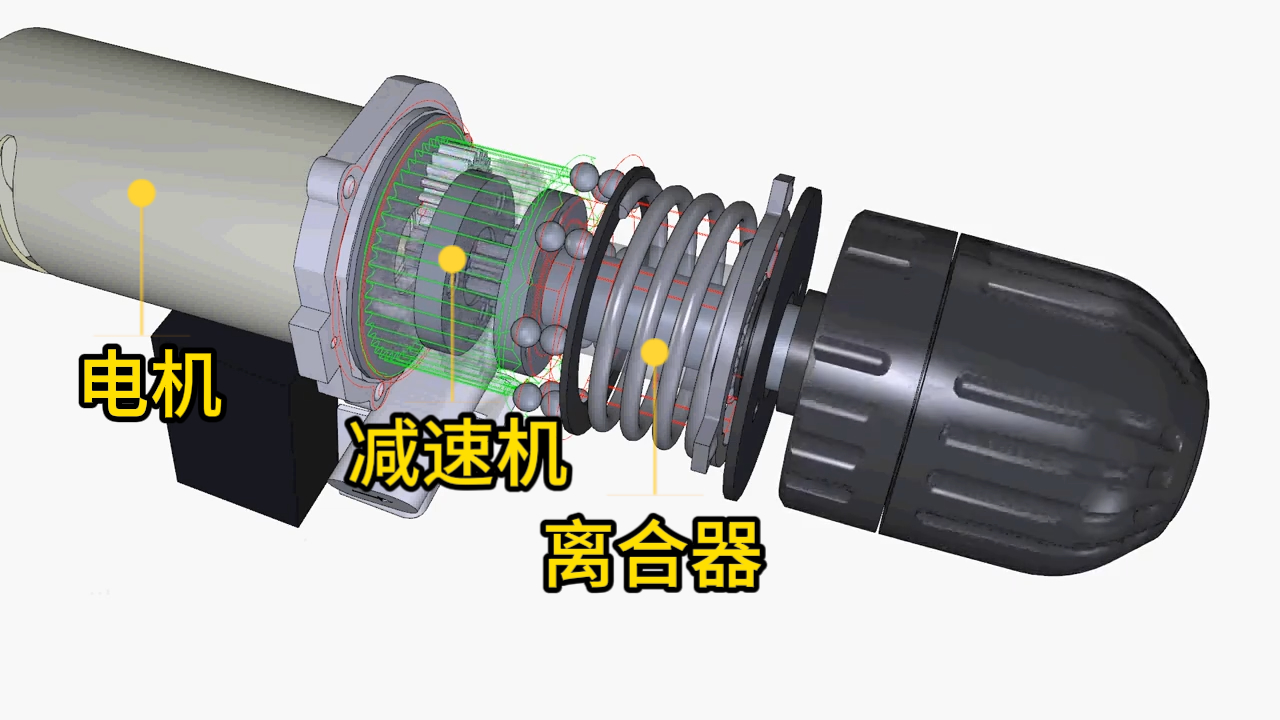
1. Semi-Automatic Electric Screwdriver: Mechanical Clutch and Physical Slippage
The structure of a semi-automatic electric screwdriver is relatively simple. It typically consists of an electric motor, a reduction mechanism, and a mechanical clutch.
Action Logic: When the screw tightening torque reaches the pressure preset by the spring, the internal clutch disengages (slips).
Performance Characteristics: Even though the torque has been reached, the motor does not receive a stop signal and continues to rotate. At this point, the clutch plates collide with each other, producing a continuous "click-clack" sound. The operator must actively release the start switch for the motor to stop.
2. Fully Automatic Electric Screwdriver: Precision Monitoring and Instant Braking
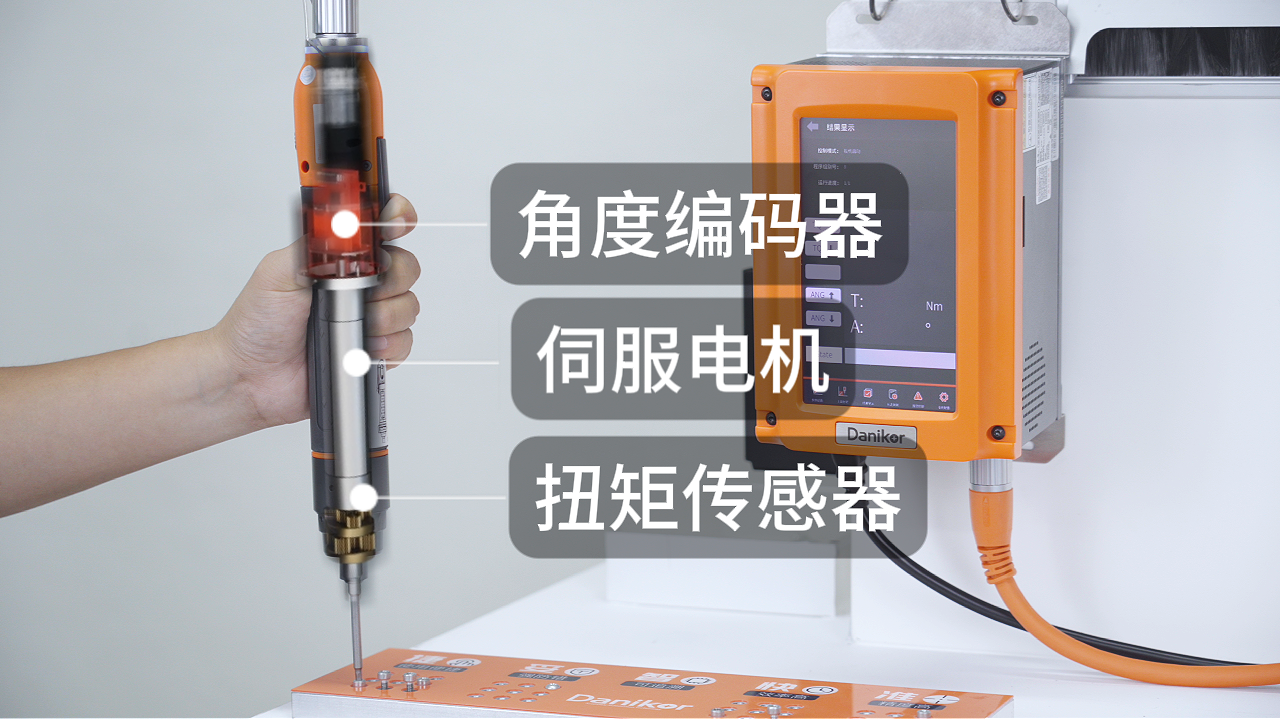
In contrast, the structure of a fully automatic electric screwdriver is much more complex, integrating components such as a servo motor, torque sensor, and angle encoder.
Action Logic: During the tightening process, the sensor monitors changes in torque and rotation angle in real-time, feeding the data back to a built-in or external controller.
Performance Characteristics: The system monitors the tightening process in real-time via sensors. Once the real-time torque precisely reaches the preset value, the controller issues a braking command, causing the automatic electric screwdriver to stop immediately. This braking is instantaneous (millisecond-level), and the tool automatically cuts off power without the operator needing to release the switch.
2. Fully Automatic vs. Semi-Automatic: Multi-Dimensional Performance Comparison
1. The Magnitude Difference in Tightening Accuracy
Semi-Automatic Electric Screwdriver: Torque control relies on the pressure of the clutch spring. Due to mechanical wear, changes in lubrication state, and differences in the operator's reaction time when releasing the switch, the dynamic torque fluctuates significantly. Typically, the accuracy of a semi-automatic electric screwdriver can be maintained around ±15%. For soft joints (e.g., plastic parts), there is a higher risk of over-tightening or thread stripping.
Fully Automatic Electric Screwdriver: The torque value during fastening is obtained directly through a torque sensor. The sensor collects data thousands of times per second and, upon reaching the target value, commands the motor to stop via the controller. The accuracy can typically reach ±7.5% or even ±3%. For hard joints or precision electronic components, a fully automatic electric screwdriver ensures that the tightening torque for each screw is highly consistent.
2. The "Multiple Evolution" of Tightening Strategies
Semi-Automatic Electric Screwdriver has almost no "strategy." Its working process is linear: start, apply pressure, slip. It cannot determine if a screw is inserted crookedly (cross-threading), if the thread is defective (stripped), or if a washer is missing.
Fully Automatic Electric Screwdriver, when paired with an intelligent controller, can preset complex fastening paths, such as "Torque + Angle Control" (tightening to a base torque, then rotating a specific angle to eliminate the influence of component gaps and ensure clamping force consistency). It also features multi-stage speed control, allowing for slow starting (to prevent cross-threading), fast mid-stage (for efficiency), and low final speed (to ensure accuracy). Furthermore, the fully automatic electric screwdriver monitors the entire tightening process, automatically determining OK/NG based on changes in torque and angle.
3. Data Storage and Upload: "Digital Twin"
Semi-Automatic Electric Screwdriver: Lacks data generation capability. All quality checks require manual secondary sampling. Data cannot be recorded in real-time and is even less traceable. In the event of a batch quality issue, it is difficult to pinpoint which workstation or which step caused the problem.
Fully Automatic Electric Screwdriver: The tightening process for each screw generates a detailed set of data, including final torque, rotation angle, tightening time, waveform chart, etc. This data is generated in real-time within the electric screwdriver or controller. The data can be uploaded in real-time to the enterprise's MES (Manufacturing Execution System) platform. Using a product barcode system, specific parts can be linked to specific fastening data, achieving "one unit, one file." Even years after a product has been shipped, the tightening records for each screw from that time can still be retrieved.
The transition from semi-automatic to fully automatic represents a shift from "being able to tighten" to "tightening well." Semi-automatic equipment addresses the issue of "labor substitution," while fully automatic equipment addresses the issue of "quality certainty." Although the initial purchase cost of a fully automatic electric screwdriver is higher, its performance in reducing defect rates, minimizing rework costs, and providing digital quality evidence results in a comprehensive return on investment that far exceeds that of traditional tools.