As the most fundamental and critical step in assembly processes, bolt tightening is undergoing a leap from "torque control" to "intelligent precision control." Especially in high-end fields such as automotive manufacturing, aerospace, and new energy batteries, traditional pneumatic tools can no longer meet stringent quality traceability and accuracy requirements. As the "heart" of precision assembly, the servo electric nutrunner has become standard equipment in smart factories. So, what core functions must a servo electric nutrunner possess to excel in high-end manufacturing tasks?
I. High-Precision Dual Closed-Loop Control of Torque and Angle
High-end manufacturing demands near "zero tolerance" for tightening quality. For example, during the assembly of automotive chassis or aircraft engines, the failure of any single bolt could lead to catastrophic consequences.
Dynamic Torque Accuracy
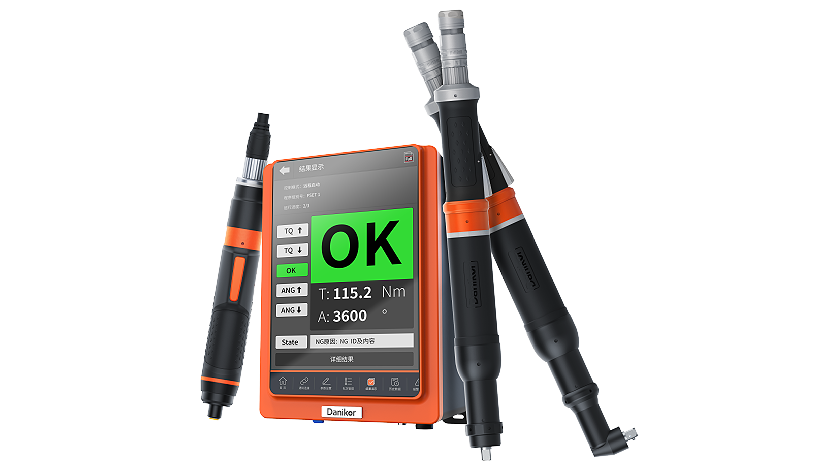
A high-quality servo electric nutrunner must exhibit extremely high dynamic torque repeat accuracy (Danikor servo nutrunner achieves 6σ ±5% accuracy). Using a high-resolution encoder and built-in torque sensor, it can monitor minute changes during the tightening process in real-time, ensuring that the torque output at every station complies with design specifications.
Multi-Step Tightening Control
Unlike simple rotation, an intelligent servo nutrunner supports multi-step programming. It can first rotate at high speed for pre-tightening, then automatically switch to low speed as it approaches the target torque to avoid overshoot and improve accuracy. Using a "torque + angle" monitoring mode, it effectively identifies issues such as cross-threading, stripped threads, or incomplete seating (floating lock).
II. Comprehensive Data Collection and Production Process Traceability
In the Industry 4.0 era, there is no quality management without data. Factories in high-end fields require that the tightening process for every single screw be traceable.
Real-Time Upload of Tightening Curves
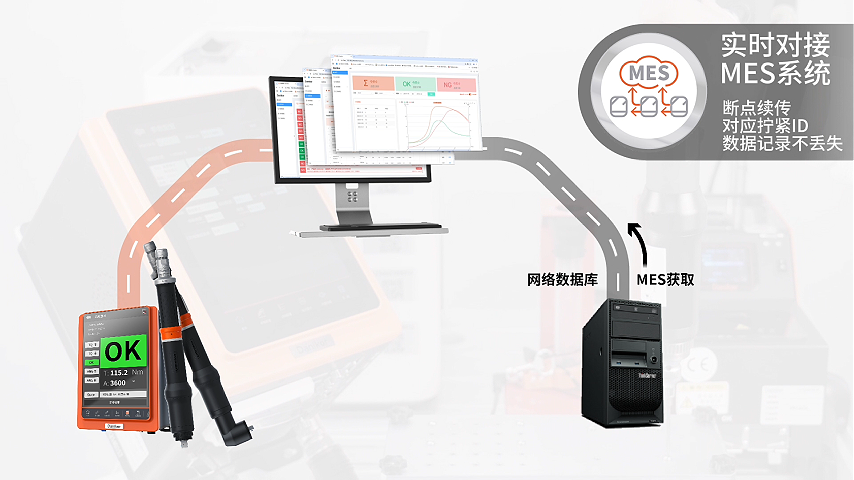
Danikor's servo electric nutrunner can record complete tightening curves (torque-time, torque-angle, etc.) and upload this data in real-time to the factory's MES (Manufacturing Execution System).
Identification and Batch Management
When used with a barcode scanner, Danikor's servo nutrunner can link tightening data to a unique product serial number. If a quality dispute arises later, engineers can quickly retrieve the servo nutrunner's operation record from the database for that specific component assembled years prior.
III. Flexible Adaptability to Working Conditions and Parameter Configuration
Factory production lines often need to handle various bolt types. Changing tools for every different product would drastically reduce efficiency.
Multi-Task/Multi-Program Storage
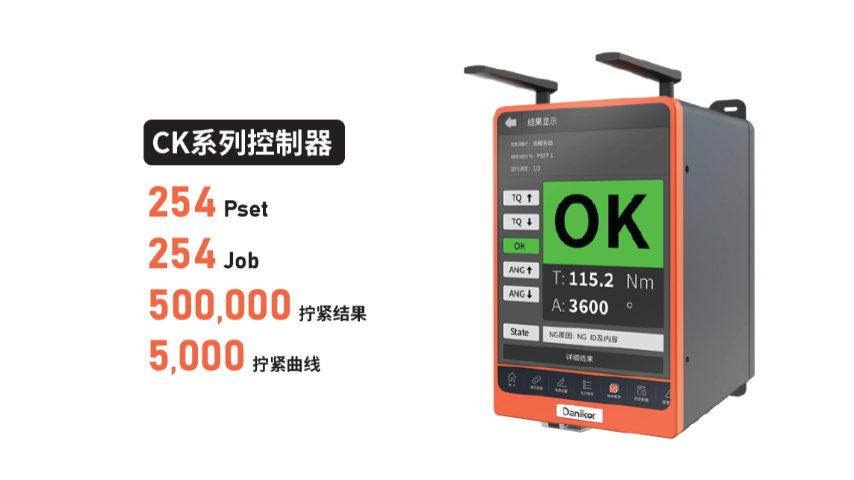
Danikor's high-performance servo nutrunner, paired with the CK series controller, supports storing up to 254 tightening tasks. By simply switching via a PLC (Programmable Logic Controller) command, the servo nutrunner can instantly change tightening parameters for different screws.
Rich Control Modes
Beyond basic torque control, Danikor's servo nutrunner features advanced strategies like "angle control" and "yield point control." Especially when handling a mix of "hard joints" and "soft joints," the nutrunner's adaptability determines the assembly line's level of flexibility.
IV. Hardware Durability and Stability
The complex factory environment and high-frequency continuous operation pose significant challenges to the hardware of a servo nutrunner.
Brushless Servo Motor
Compared to brushed motors, the brushless design of a servo nutrunner not only eliminates carbon dust contamination (crucial for the medical or precision electronics industries) but also significantly extends service life and maintenance intervals. Danikor's servo nutrunner achieves an average of 1,000,000 cycles mean time between failures (MTBF) and an operational lifespan of at least 10,000,000 cycles.
Calibration Interval
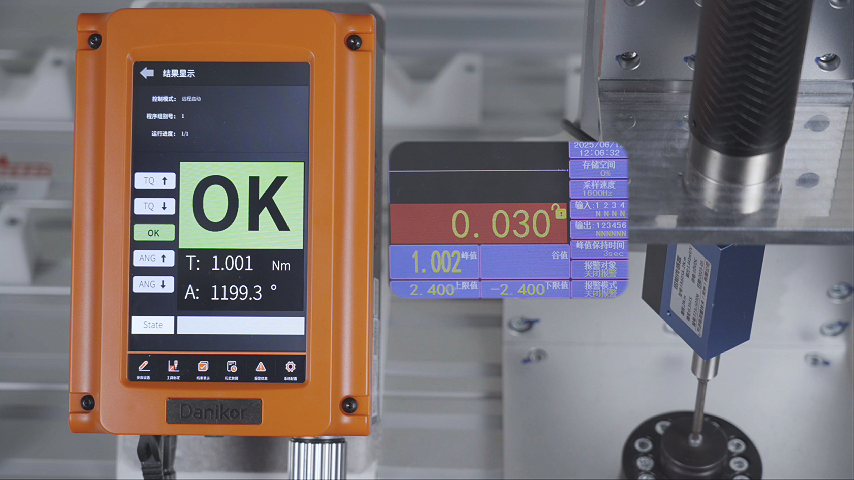
Establishing a scientific calibration schedule is vital to ensure assembly accuracy always meets design specifications. Due to its excellent performance, the Danikor servo nutrunner does not require daily checks. Its recommended calibration interval is generally 250,000 cycles/one month (for ultra-high frequency production lines) and 500,000 cycles/two months (for standard frequency automated assembly tasks).
In the high-end assembly market, the competition among servo electric nutrunners has long surpassed simple rotation functionality, moving instead into the realm of "algorithms" and "system integration." By deeply cultivating the field of intelligent tightening, Danikor has deeply integrated servo control technology with complex process algorithms. Its servo nutrunner not only achieves internationally leading accuracy but also possesses distinct advantages in localized service and MES compatibility, making it one of the top choices for high-end replacements.