Flexible Feeding Solves the Challenge of Automatic Tightening for Non-Standard Screws
In the field of industrial assembly, the application of non-standard screws such as screw plugs and ultra-small length-to-diameter ratio screws is becoming increasingly widespread. However, due to their special shapes and irregular dimensions, these screws cannot be automatically fed using traditional screw feeders. Manual feeding is inefficient and prone to errors, becoming a critical bottleneck restricting production line upgrades. Flexible feeding serves as an efficient solution adapted to non-standard screws, breaking the limitations of traditional feeding methods and achieving integrated operations of automatic sorting, screw picking, and tightening. This article will provide a detailed breakdown of the core working logic of flexible feeding, combined with the practical advantages of Danikor's flexible feeding system, offering enterprises feasible assembly optimization solutions to help overcome the challenges of automatic tightening for non-standard screws.
I. The Dilemma of Non-Standard Screw Feeding: Traditional Feeding Methods Are Difficult to Adapt
Screw plugs lack obvious thread guidance, and ultra-small length-to-diameter ratio screws are prone to tipping over. Compared with conventional screws, they have no unified standard in appearance. The fixed track design of traditional screw feeders cannot adapt to their special structures. They mainly face three major difficulties that make it hard to meet automated assembly requirements:
Poor feeding adaptability: Traditional feeders rely on fixed tracks to convey materials. The special shapes of non-standard screws cannot pass through the tracks smoothly, making automatic sorting impossible. Manual adjustment of screw postures one by one is required, which is time-consuming and labor-intensive.
Frequent jamming risks: Non-standard screws have irregular dimensions and are prone to getting stuck in track gaps, discharge ports, and other positions during conveying in traditional feeders. Manual cleaning is frequently required, which not only affects production rhythm but may also damage screws and equipment.
Insufficient assembly consistency: Manual feeding is prone to problems such as missing screws, wrong screws, and posture deviations, resulting in incomplete screw tightening, affecting product assembly quality, increasing rework costs, and failing to meet the standardization requirements of enterprise mass production.
II. Flexible Feeding: The Core Path to Achieving Automatic Tightening of Non-Standard Screws
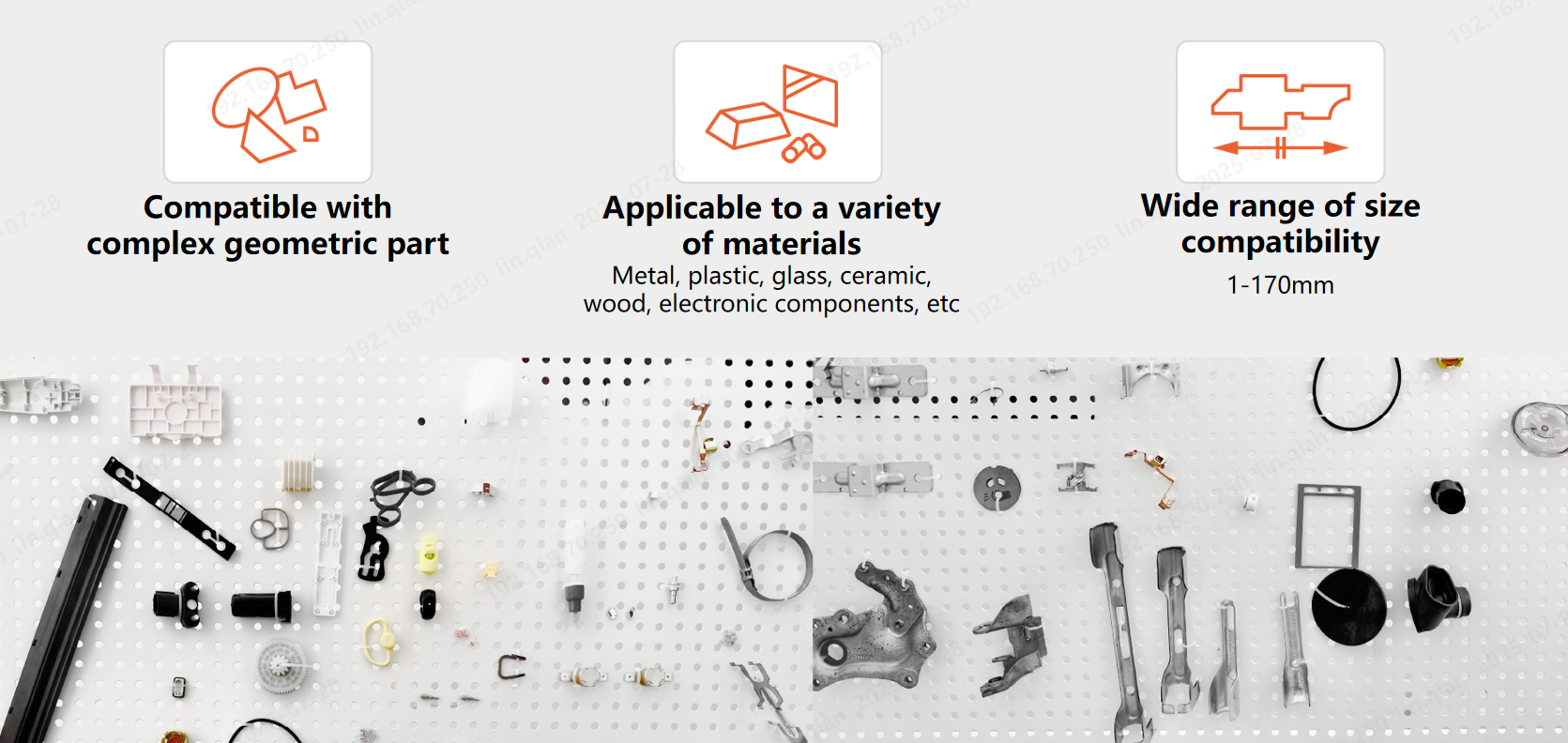
Flexible feeding, with "flexible adaptation and intelligent coordination" at its core, breaks the fixed track limitations of traditional feeders. Through customized trays, visual recognition, and robot coordination, it adapts to non-standard screws such as screw plugs and ultra-small length-to-diameter ratio screws to achieve automatic tightening. The core process is divided into three steps, adaptable to various industrial assembly scenarios:
Customized tray for calibrating screw posture: The core component of the flexible feeding system is the flexible vibratory bowl, which can be customized with holes or slots on the tray surface according to the shape and size of non-standard screws, fitting the structural characteristics of the screws. Through the smooth vibration of the vibratory bowl, screws are driven to move randomly and gradually adjusted to the standard posture with the screw head facing upward, laying the foundation for subsequent screw picking and tightening. The Danikor flexible feeding system can quickly complete tray customization, adapting to different specifications of non-standard screws with convenient changeover.
Visual recognition for positioning coordinates: The flexible feeding system is equipped with a high-definition visual recognition module that captures the posture of screws on the vibratory tray in real-time. It intelligently screens out qualified screws with the screw head facing upward while capturing their coordinate positions, synchronously transmitting the data to the robot to avoid wrong picking or missed picking, ensuring smooth progress of subsequent tightening work.
Coordinated operation to complete automatic tightening: After receiving the coordinate data transmitted by the vision module, the robot carries the tightening module to move to the corresponding position, steadily grabs the screw in the qualified posture, and transfers it to the tightening station to complete automatic tightening. If there are no screws in the correct posture on the tray during the tightening process, the vibratory bowl will simultaneously start vibrating to replenish screws, achieving efficient coordination between feeding and tightening, and fundamentally eliminating jamming risks.