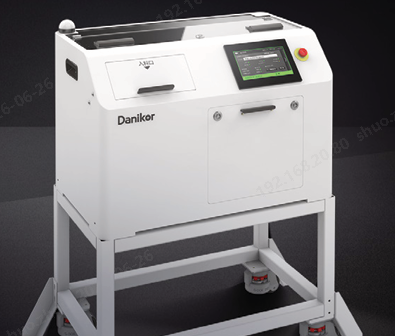
In automotive lamp assembly, dual-head studs are critical fasteners for connecting thick-wall components. However, their special structure and difficulty in feeding have always been a pain point for automated production lines. Danikor has introduced a star-wheel feeder to solve the challenges of feeding, orientation recognition, and clean supply for dual-head studs, helping to ensure stable and efficient operation of lamp production lines.
.png "/uploads/image/2026/07/02/1782968923294807/1 (5).png")
I. Three Core Pain Points in Automated Feeding of Dual-Head Studs for Automotive Lamps
Pain Point 1: Unequal Thread Lengths, Difficulty Distinguishing Orientation, Leading to Screwing Errors
The thread lengths on the two ends of a dual-head stud are typically not equal. Lamp assembly has strict requirements for the stud's screwing direction: one end must be screwed into the threaded hole of the lamp housing, and the other end is used for nut fastening. Traditional feeding equipment cannot automatically identify the front and rear ends of the stud, making it prone to orientation errors. This can lead to assembly failure, stud scrappage, and even affect the structural integrity of the lamp, creating potential safety hazards. Manual sorting is inefficient and cannot meet the cycle time requirements of automated lines.
Pain Point 2: Long Studs Prone to Wear During Conveying, Generating Debris that Contaminates the Lamp Assembly Environment
Lamp assembly requires a high level of cleanliness. During traditional feeding processes, dual-head studs are prone to friction and collision, generating metal debris. This debris can contaminate precision components such as optical assemblies and PCBs, affecting product yield. Simultaneously, the stud threads are easily damaged by impacts, leading to cross-threading or insufficient tightening during subsequent fastening, which reduces the reliability of the lamp connection.
Pain Point 3: Long Studs Cause Jams and Unstable Conveying, Disrupting Production Rhythm
Dual-head studs are relatively long and slender. Traditional feeding equipment is prone to jamming, tangling, and conveying interruptions. Frequent line stoppages for cleaning disrupt the continuous production rhythm of the lamp line. Furthermore, traditional equipment has poor adaptability and cannot handle dual-head studs of different specifications simultaneously. Model changeovers for multi-variety lamp production require tooling replacement, leading to long debugging cycles and high costs.
II. Danikor's Feeding Solution for Dual-Head Studs, Overcoming Lamp Assembly Challenges
Advantage 1: Star-Wheel Feeder Enables Low-Wear, Clean Conveying
Danikor's star-wheel feeder is suitable for special fasteners like dual-head studs and long bolts. It provides stable feeding and a more continuous cycle. A new feeding logic effectively prevents material stacking and squeezing, enabling gentle feeding. The low-impact feeding logic reduces surface damage to materials, prevents thread wear and metal debris generation, and meets the clean production requirements of lamp assembly. The equipment can stably convey dual-head studs of varying lengths with a 0% jam rate, ensuring stable line rhythm and reducing the need for frequent maintenance stops.
Advantage 2: AI Vision Closed-Loop Control for Intelligent Recognition, Precisely Identifying Stud Orientation
Using AI vision algorithms and self-learning of correct material postures, the system identifies and rejects abnormally oriented materials in real-time, improving feeding efficiency. It automatically distinguishes the thread length difference between the two ends of the dual-head stud, precisely identifying the front and rear orientation. This ensures that studs are conveyed to the tightening station in the preset direction, fundamentally preventing assembly defects caused by orientation errors. Visual recognition for positioning and picking, combined with a secondary visual inspection module, further verifies material posture, thereby enhancing the accuracy and success rate of picking. Simultaneously, the vision system monitors the feeding status in real-time, providing early warnings of material shortages to prevent entire line stoppages due to material depletion.
Advantage 3: Flexible Compatibility for Multiple Specifications with One Machine
The system supports the compatibility of materials with similar dimensions or specifications, improving equipment reusability and reducing investment costs. The equipment can easily interface with automated tightening equipment and robotic workstations for lamps, enabling automated conveying and tightening of dual-head studs. This reduces manual intervention and enhances the automation level and assembly consistency of the production line.
III. Core Advantages of the Solution, Empowering Automated Assembly of Dual-Head Studs for Lamps
Precise Orientation Recognition: The AI vision system automatically distinguishes the front and rear ends of the stud, eliminating orientation errors and ensuring lamp assembly quality.
Low-Wear, Clean Conveying: The feeding logic reduces friction and impact on the studs, preventing debris contamination and meeting the cleanliness standards for lamp production.
High Adaptability and Easy Changeover: Supports the feeding of different specifications of dual-head studs. New materials can be introduced quickly, adapting to the flexible production of various lamp models.
0% Jam Rate and High Stability: The conveying process is stable and smooth, significantly reducing the frequency of maintenance stops and ensuring production line rhythm.
Danikor's star-wheel feeder solution provides a reliable method for the automated feeding of dual-head studs for lamps. It helps automakers overcome production bottlenecks, improve assembly yield and production efficiency, and empower the upgrade to smart manufacturing.