Why is TCP More Suitable for the Intelligent Requirements of Smart Electric Screwdrivers?
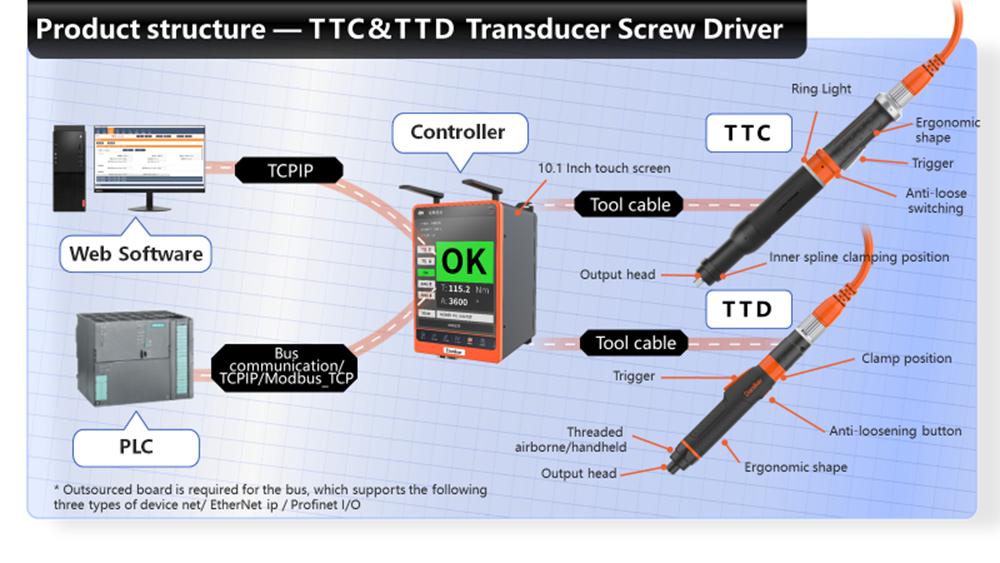
In the process of industrial intelligent transformation, smart electric screwdrivers, as key equipment in the assembly process, have their data transmission stability, real-time performance, and integrity directly affecting production quality control and the effectiveness of intelligent upgrades. Communication technology is the core support for smart electric screwdrivers to achieve data interaction and remote management. Among them, RTU and TCP are two common communication methods in the industrial field. As the demand for smart electric screwdrivers in data traceability and real-time control continues to increase, TCP has gradually demonstrated stronger adaptability than RTU. This article will start from the core differences between the two and deeply analyze the key reasons why TCP adapts to the intelligent requirements of smart electric screwdrivers.
I. Core Communication Characteristics Differences Between TCP and RTU
(1) Communication Mode: Half-Duplex vs Full-Duplex, Worlds Apart in Interaction Efficiency
RTU communication is based on serial port technology and adopts a half-duplex communication mode, which means that only one-way data transmission can be achieved in the communication link at the same time. For smart electric screwdrivers, if RTU communication is used, when the screwdriver uploads tightening data to the upper-level system, it cannot simultaneously receive parameter adjustments, start/stop controls, and other instructions issued by the upper-level system; conversely, when receiving instructions, data upload will be forced to interrupt. This one-way interaction mode limits the real-time response capability of smart electric screwdrivers, making it difficult to adapt to the core requirement of "running while transmitting and regulating" in intelligent production.
TCP communication, based on IP network architecture, supports full-duplex communication mode. In this mode, the communication link between smart electric screwdrivers and the upper-level system can carry two-way data transmission simultaneously. While continuously uploading data such as torque, angle, and time during the tightening process, the screwdriver can receive instructions from the upper-level system in real time, such as adjusting tightening parameters according to the assembly requirements of different workpieces, or receiving emergency stop instructions when abnormalities are detected. The full-duplex communication mode provides the basic guarantee for real-time control of smart electric screwdrivers, making the interaction between devices and systems smoother.
(2) Connection Stability and Data Guarantee: No Guarantee vs Full-Link Guarantee
RTU communication has no mechanism for establishing a stable connection. Data transmission adopts a "send and end" mode, lacking data retransmission function. In industrial production sites, there are various complex interference factors such as motor start/stop, line interference, and signal attenuation, which can easily cause data loss or errors in RTU transmission. The tightening data generated by smart electric screwdrivers is the core basis for product quality traceability. Once data is missing, the quality of the corresponding batch of products cannot be verified, burying serious quality hidden dangers.
TCP communication, through the "three-way handshake" mechanism, establishes a stable connection to ensure that both communication parties confirm their identities and the link is clear before data transmission. More importantly, TCP has a timeout retransmission mechanism. When data is lost or has errors during transmission, the system will automatically detect and trigger a retransmission process until the data is completely delivered to the receiving end. This full-link data guarantee mechanism can ensure that every piece of tightening data generated by smart electric screwdrivers is accurately and completely transmitted to the upper-level system, providing reliable data support for quality traceability.
(3) Transmission Range and Scalability: Limited to Local vs Supports Remote Interconnection
The transmission range of RTU communication is limited by serial port technology, usually only covering local small-area scenarios, and the transmission distance is limited, making it difficult to achieve cross-regional, remote data interaction. With the development of industrial intelligence, many enterprises adopt distributed production layouts and need to centrally control smart electric screwdrivers in different workshops and different plants. The limitations of RTU communication make it unable to meet this need for remote centralized control, restricting the overall advancement of enterprise production intelligence.
TCP communication is based on IP networks and is not limited by geographical range. As long as it is connected to a network, it can achieve remote data transmission and control across workshops, plants, and even across regions. Enterprise management personnel can view the operating status and tightening data of smart electric screwdrivers in different regions through the upper-level system in real time, remotely issue control instructions, and achieve centralized and globalized management of smart electric screwdrivers. At the same time, TCP networks have stronger scalability. When enterprises add new smart electric screwdriver equipment, they only need to connect the equipment to the existing IP network to quickly complete networking and data access without rebuilding dedicated communication links, reducing the cost and difficulty of enterprise intelligent upgrades.
II. Core Advantages of TCP Adapting to the Intelligent Requirements of Smart Electric Screwdrivers
(1) Supporting Real-Time Control, Meeting Dynamic Production Demands
One of the cores of smart electric screwdriver intelligence is to achieve dynamic regulation of the production process. In assembly scenarios such as automotive parts and electronic components, different batches and types of workpieces may require different tightening parameters. TCP's full-duplex communication capability allows smart electric screwdrivers to receive parameter adjustment instructions from the upper-level system in real time during operation, completing parameter updates without interrupting current operations, ensuring assembly quality and production continuity. RTU's half-duplex mode cannot achieve this dynamic interaction and can only reset parameters after equipment shutdown, affecting production efficiency and flexibility.
(2) Ensuring Data Integrity, Building the Foundation for Quality Traceability
Quality traceability is one of the core requirements of industrial intelligent production, and the tightening data generated by smart electric screwdrivers is a key link in the traceability chain. Whether it is troubleshooting the cause of quality problems in subsequent products or quality sampling during the production process, complete and accurate tightening data is needed. TCP's connection stability and timeout retransmission mechanism technically ensure the integrity of data transmission, avoiding quality traceability gaps caused by data loss. In contrast, RTU's unguaranteed data transmission characteristics can hardly meet the strict requirements of smart electric screwdrivers for quality traceability.
(3) Aiding Global Control, Promoting Intelligent Upgrades
One of the core goals of enterprise intelligent upgrades is to achieve centralized control and allocation of production resources. The advantages of remote interconnection and scalability of TCP communication allow smart electric screwdrivers to easily integrate into the enterprise's global intelligent manufacturing system. Through the IP network, the upper-level system can achieve unified monitoring, unified scheduling, and unified maintenance of all smart electric screwdriver equipment, improving production management efficiency. At the same time, a large amount of tightening data transmitted based on TCP can also be incorporated into the enterprise's big data analysis system, providing data support for production process optimization, equipment maintenance warning, etc., further enhancing the enterprise's intelligent level.
RTU communication, limited by characteristics such as half-duplex mode, unguaranteed data transmission, and limited transmission range, has been unable to meet the intelligent requirements of smart electric screwdrivers in real-time control, quality traceability, and global control. TCP communication, with its core advantages of full-duplex interaction, stable connection and data retransmission guarantee, remote interconnection and strong scalability, meets the intelligent development needs of smart electric screwdrivers and has become the key communication cornerstone supporting the integration of smart electric screwdrivers into intelligent manufacturing systems. As the level of industrial intelligence continues to improve, the application of TCP communication in the field of smart electric screwdrivers will become more widespread, providing strong support for enterprises to achieve high-quality intelligent production.